It’s Been a Long Time

For all of you who are wondering, I did not fall off the face of the earth, forget about my blog, or break all my typing fingers. It’s simply been a very busy and action packed summer. Figures, when you have exciting things to blog about you don’t have enough time to blog about it! I promise I’ll try to be a better blogger and post more frequently now that things are slower. For several posts I’m going to back track and catch you up to speed about the summer.


First Life

The corn is up! This is a picture from the first field that sprouted.

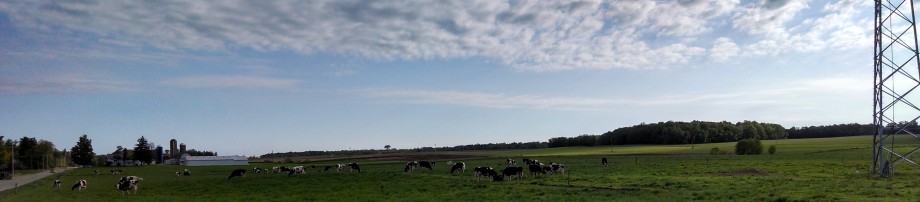
Dad has been planting corn since the 14th of this month, sometimes all through the night. He has 145 acres done, with about 95 acres left to plant. The corn we grow is used for two differt types of cow feed: corn silage and grain. Corn silage is the entire plant chopped up and stored in a silo. For grain we use our combine to only harvest the dried kernels. The kernels then go into the grain recipe our nutrionist writes.

The picture I posted was taken yesterday. Already, you can count the rows in the field. This means the plants are tall enough that you can distinctly see the sprouts and the rows they were planted in. It’s hard to believe this tiny sprout will soon be over 7 feet tall! And you thought your kids grew fast!

Although the corn is starting to shoot up, we need some rain. It hasn’t rained since Dad planted the field, over 10 days ago. Thankfully there is enough moisture trapped in the ground to let the corn start growing. A good soaking though would really kick the plants into high gear.

Face of a Farmer

What do you think a farmer looks like? Dirty? Smelly? Maybe you imagine the stereotypical caricature of a portly man wearing overalls and leaning on a pitchfork. According to the American Farm Bureau the average consumer is more than 3 generations removed from the farm. Perhaps you are like most of the population. You’ve never had a chance to talk with a real dairy farmer. You’re concerned about the safety of your food and the way animals are being treated.

The good news is dairy farmers are concerned about the same things you are! Producing safe, quality milk is something we take pride in. Farmers want to care for the earth so that flourishing, productive land can be passed on to their children. Farmers know that only healthy, happy cows will produce milk.

If you’d like to “meet” a real farmer check out Face of a Farmer. The Erie County Agricultural Society interviewed my dad for their new webpage. Click on the link below. You can read the article about my dad and watch the video in the top right hand corner. I hope you’ll see that farmers are people too and that they care deeply about their families, their farms, and their communites.

http://www.ecfair.org/face-of-a-farmer/archive/richmond-farms-dairy-2012/

Here’s a picture of a real farming family:

My Farming Family

Pigs in a Blanket

New Pigs

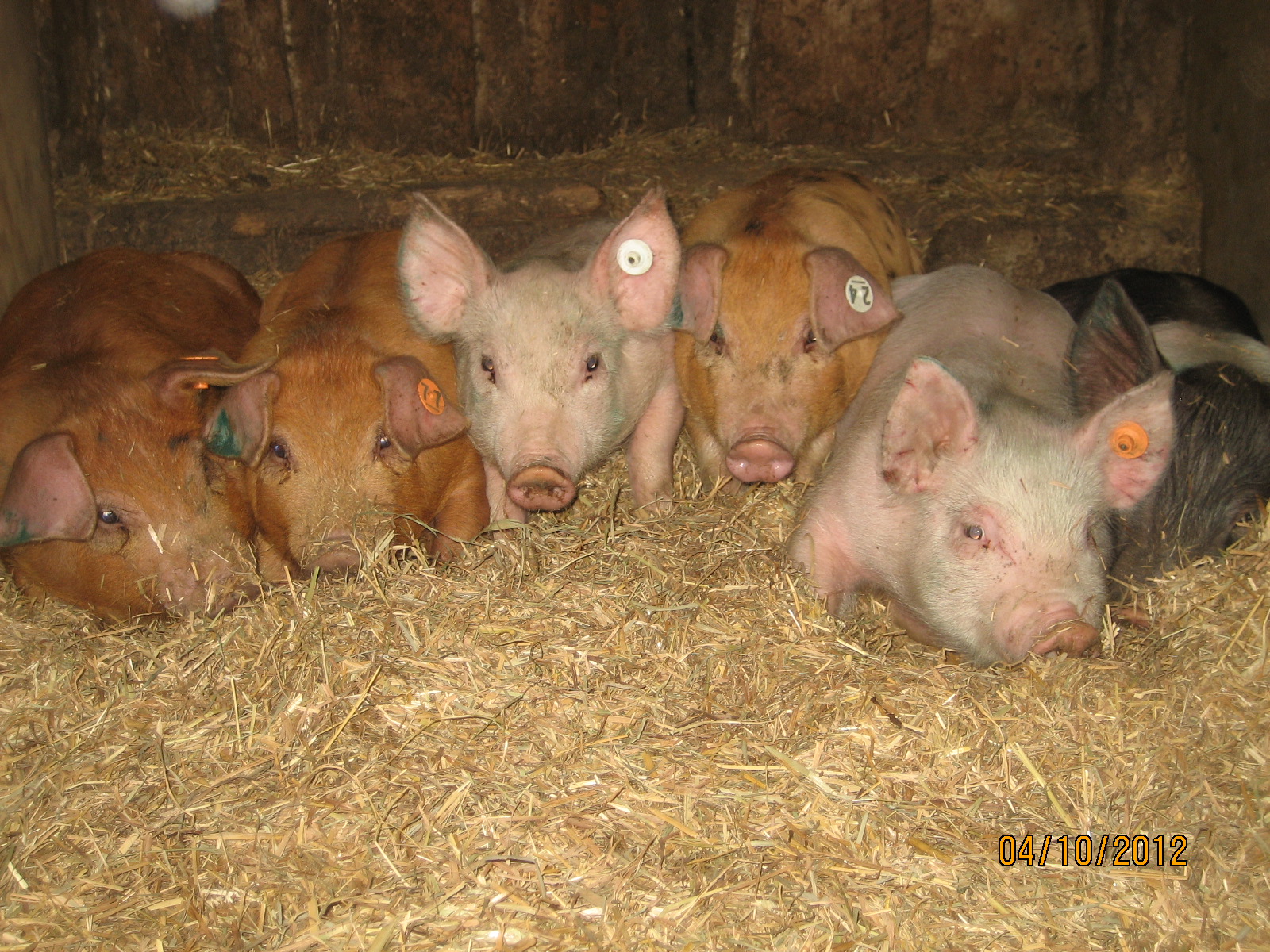
Yesterday we picked up our new 4-H pigs! Every year I raise a pig for the 4-H auction, plus one for my family’s freezer. The pigs are about two month old right now and are housed in a special pen we built for them. In the picture I posted they are snuggling in a little hutch we made, equipped with a heat lamp, so that they will stay warm.  When the weather gets better we will set up their outside pen.

We are raising four pigs this year. The extra two in the picture belong to a friend who has to finish his pig pen before taking them home. The red pigs are a special breed called Spot Rocs (short for Spotted Durocs). My pig is one of the pink pigs (called a Yorkshire) and the black one is a Hampshire.

I have found many benefits to raising my own pig. Since I grow the pork my family eats I know that the meat came from a healthy animal. Local businesses benefit from the advertising they recieve when they purchase a pig at our 4-H auction. Also, the pigs I raise are kept comfortable and are humanely treated.

You’re Kidding!

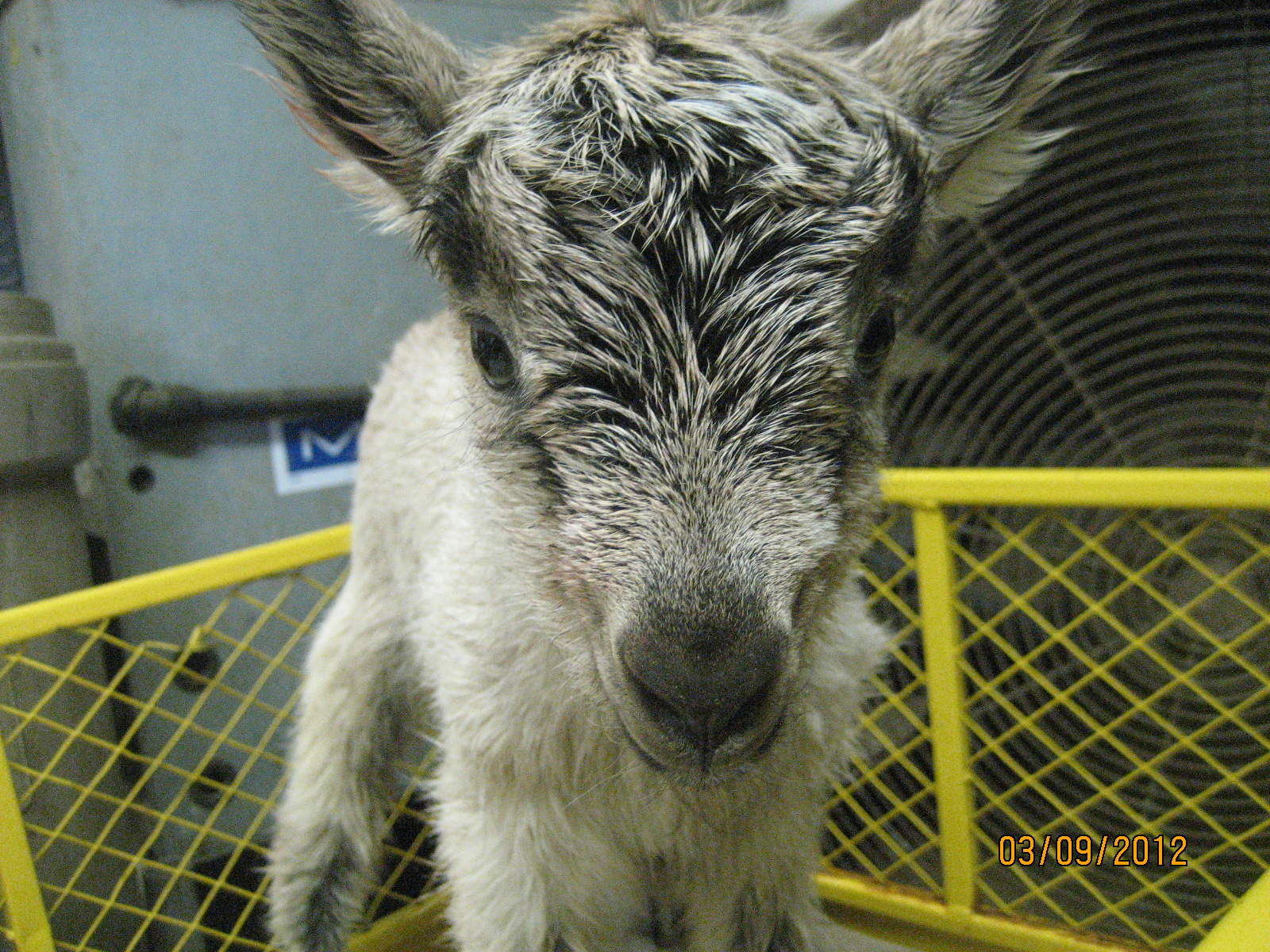
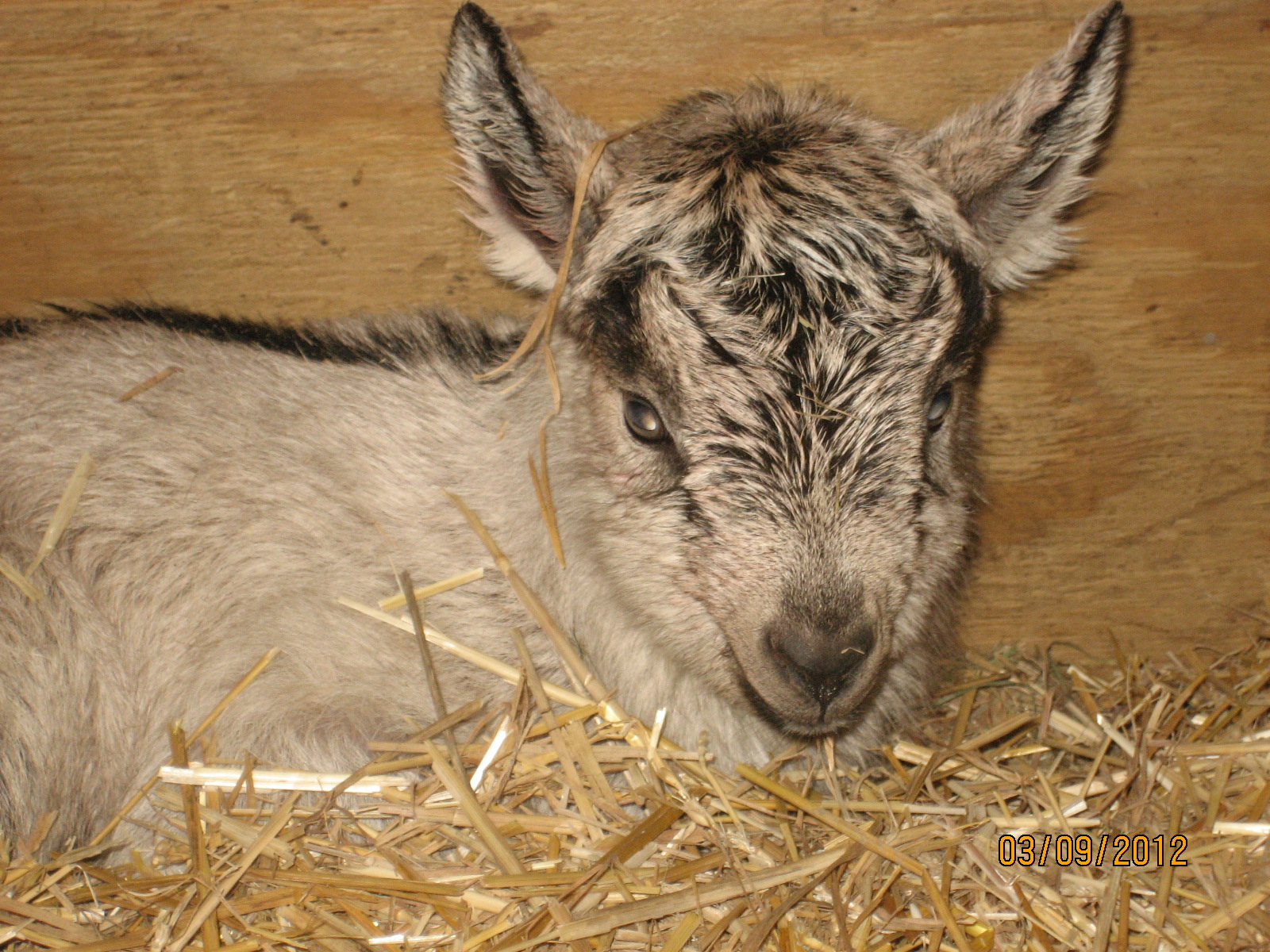
Sekula the goat kidded today! Kidding is the act of a goat giving birth.  She had an adorable set of boys, which are called bucks.

Sekula's New Twins

When the babies were born they were obviously very wet. I took them one at a time to dry off and get warm. After dipping their umbilical cords in a disinfectant I put them back in with their very attentive mommy.

Drying off the baby

A goat must have babies before she can start giving milk. Since Sekula just kidded she is now once again producing milk. Aren’t her babies the sweetest?!

Baby number 1
Baby number 2

Bottle Feeding Babies

Newborn Calf

Isn’t she cute? This is a five day old heifer calf. She weighed about 100 pounds when she was born. During the winter calves need to be kept warm, that is why she has a blanket on. Like most of the calves on our farm, she is from the Holstein breed.

I fed calves this morning with the help of two of my brothers. Small calves like this one are fed on bottles. Each calf gets 2 bottles, equivalent to 1 gallon of milk.

Our calves are housed in a special barn, kind of like a baby nursery. The calves are fed milk twice a day, and have water and grain available all day long. The care of our babies is very important to us. This heifer, like all of ours, will stay on our farm and one day will have a baby of her own.

The Coop

Our chickens enjoying apples in the snow

Allow me to introduce you to the chickens, 28 of the most scaredy of cats you’ll ever meet. The good news is we have a totally enclosed run to protect them from any famished felines or other predators.

We started raising chickens in 2010 because Mom and I were concerned about buying eggs from production birds kept in small cages. We also wanted our eggs to be fresh, since eggs in the grocery store can be over 3 weeks old when you buy them.

One of our Barred Rocks when we first got her

All of our chickens are Heritage Breeds. Heritage Breeds lay less eggs than production birds, so they are generally not used by large egg producers. Our breeds include: Buff Orpingtons, Ameraucanas, Delawares, Barred Plymoth Rocks, Speckled Sussex, and New Hampshire Reds.

These birds all lay brown eggs, except for the Ameraucana, or “Easter Egg Chicken” that lays green eggs. Brown eggs have no nutritional difference from white eggs. However, brown eggsusuallycome from the Heritage Breeds of chickens and not the production breeds.

Doesn't get any fresher than this!

Meet the Kids

Since I just started this blog I thought I’d introduce you to the most important part of our farm, the animals! In this post I’ll introduce you to the goats; in later posts you’ll get to meet the chickens, rabbits, and the cows. All my goats are Alpines, which is one of the biggest breeds of goats. Alpines are known for their hardiness, milk production, and high energy levels.

Sekula was born April 2, 2008, and is my oldest doe (female goat). She was one of the 3 original goats I purchased to start my herd. Sekula is a very personable and friendly goat. She is due to kid (give birth) for the second time next month.

Sekula

Sekula gave birth for the first time last March to a set of twins. Her kids are named Frodo and Ellie. Ellie is very energetic and playful. She is big for her age and won Junior Champion at the fair last year. This year Ellie will be shown as a Dry Yearling.

Ellie


Frodo is Ellie’s twin brother. He is a wether that I want to train to pull a cart. His disposition is perfect for this, since he is very sweet and gentle.

Frodo


Miracle


Female goats, called does, produce milk. Does must give birth before they start giving milk.


Pregnant Sekula & Miracle


Welcome!

Welcome to my new blog. My name is Michaela and I am the farming daughter! I live on a dairy farm in western New York where my family has been farming since 1835. I am a homeschooled Junior in highschool and the 7th generation of dairy farmers in my family.

Many people don’t know what living on a farm is like. They have questions about where their food comes from, how it’s raised, and if it’s safe to eat. I am writing this blog to show you what life is like growing up on a real farm.

I have lived on the same farm my entire life, in fact my great-grandpa built the house I live in. My dad grew up in the same house and my grandpa was born in it! Our farm has survived family deaths, bad milk prices, blizzards, and the Civil War.

Although life on a farm is not easy, there is always something to do. You never get bored on a farm, and you appreciate your free time more. There are lessons to be learned, some harder than others. You never know what a day might bring. The tractor might break, the unloader conk out, or the hay get wet. Some people ask us why we stick it out. Why not just find an easier job? The truth is, farming is our passion, not matter how hard it gets our family has been in it for the long haul. As my grandma said to a reporter once, “farming just kind of gets in your blood.” I hope you enjoy the adventures of a farming daughter!